Long runtime versus a unit that cannot catch up
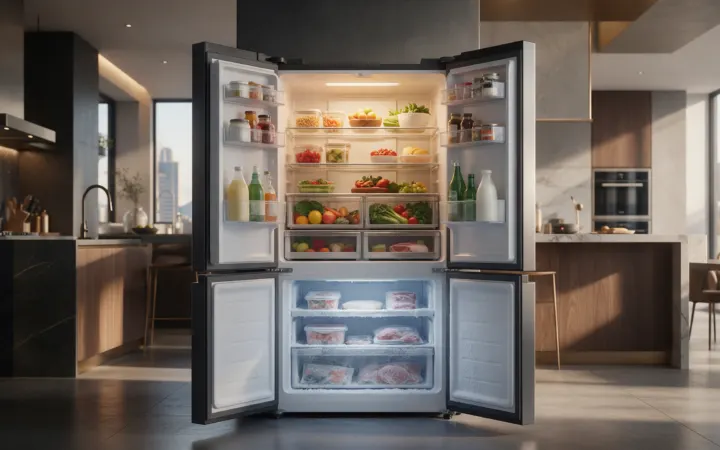
Running for a long stretch is not automatically a fault. After you have loaded a week of groceries, held the door open during a party, or had the kitchen hot all afternoon, the system runs longer to pull the cabinet back down. What matters is the result. If the temperature comes back to normal and the unit eventually cycles off, the long run was probably the load. If the compressor runs for hours and the inside stays warm, the machine is losing the contest and something is limiting it.
Some Viking refrigerators are built with variable-speed compressors, and the motor speed changes with demand. The FBI7360W, a 7 Series 36-inch integrated bottom-freezer, uses two separate variable-speed compressors, and the VCFB5304 all freezer uses a variable-speed DC compressor. On cabinets like these, a low steady hum for long periods can simply be the compressor running slowly on purpose. Louder, faster running that does not end is the pattern to take seriously.
The CL message and the condenser coil
The clearest owner-readable clue is the CL message. When the display blinks CL, the refrigerator is telling you that the condenser coil is due for cleaning. A coil coated in dust cannot shed heat, so the compressor stays on longer to do the same job. The manual’s instruction is to clean the coil and then hold the UP and DOWN arrows for 3 seconds to clear the message. Our CL display code page has the same steps.
If your model is not showing CL but has not had its coil cleaned in a long time, the same logic applies. Look at the grille area and the space behind or under the unit for lint and pet hair. Switch the appliance off at the control before cleaning around it, and use a soft brush or vacuum attachment rather than anything that could bend fins.
Doors, drawers and open-door alarms
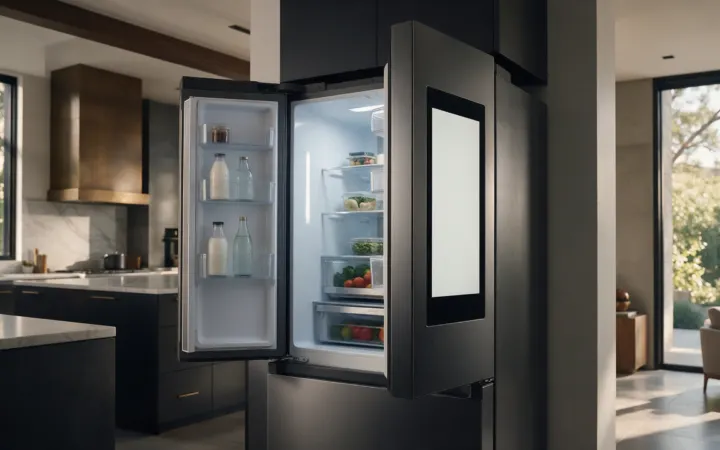
A door that is slightly ajar lets warm room air in continuously. Viking sounds an OPEN DOOR ALARM when a door or drawer stays open longer than 3 minutes, and you can close the door or press the ALARM button to silence it. If you hear that alarm often, treat it as evidence that something is stopping the door from closing fully. On an undercounter model such as the FRUI5242D, a 5 Series with 5.5 cu. ft. of interior capacity and 162 twelve-ounce cans of storage, a heavily loaded door shelf or a crooked custom panel can keep the gasket from seating.
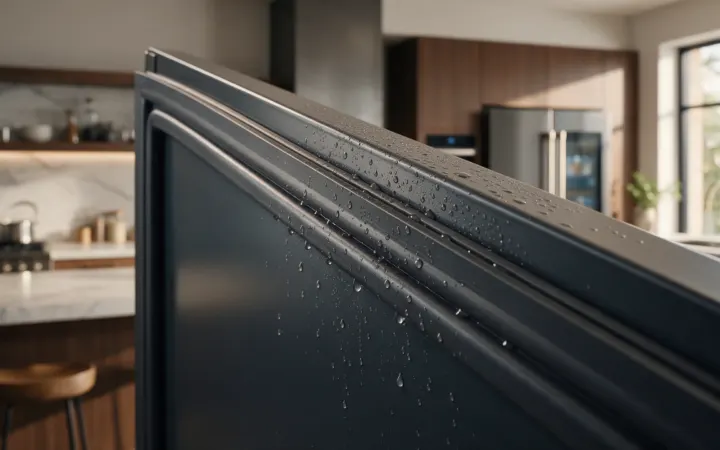
Run your hand around the gasket and look for tears, flat spots or food residue. A dollar bill or similar strip closed in the door at several points will show a weak seal.
Using alarms and sensor codes to judge whether it is a fault
- HIGH TEMPERATURE ALARM: the temperature rose above the allowed limit. If it sounds while the unit is also running constantly, the cooling is not keeping up. The high temperature alarm page describes the display behaviour.
- oPn or Shr: a temperature sensor problem. A sensor that reports wrongly can make the control run the compressor when the cabinet is already cold.
- LONG TERM POWER LOSS: the unit has been without power and will run hard to recover. Any key press clears the indicator.
None of these messages proves a failed compressor on its own. They narrow the field, which is what a technician needs to know when they arrive.
Ice maker and cabinet size as extra load
Features that add heat load can lengthen run time. A large freezer with a factory-installed ice maker, such as the FDFB5364, a 36-inch all freezer with 19.2 cu. ft. of capacity and an automatic ice maker, has more to cool and more activity inside. Loading fresh, warm items into a freezer will keep it running until they freeze through. A new installation also needs time to settle, and a freezer or refrigerator that has just been switched on will run for a long time at first.
What a technician checks when the compressor never rests
If the coil is clean, the door seals well, the load is reasonable, and the unit still runs constantly with a warm cabinet, the next step is a technician. They check the condenser fan, the evaporator for frost, the sensors behind oPn and Shr, and the sealed-system performance. Those are not owner tasks. The refrigerator repair service page and the Viking refrigerator reference show what we handle.
What to note before you book a constant-running unit
Read the model and serial number from the rating label and write down any message the display has shown, including CL. Tell us when the constant running started, whether it followed a power cut or a move, whether the inside is actually warm or just loud, and what you have already cleaned. It also helps to know the room temperature and whether the unit is built into cabinetry with limited ventilation.
Frequently asked questions
Is it normal for a Viking refrigerator to run all day after I load it?
For a while, yes. After a large restock the system runs longer to remove the heat. If it is still running and the inside is not cooling down after a full day, a check is reasonable.
Will clearing the CL message fix the constant running?
Only if the coil is cleaned first. Holding UP and DOWN for 3 seconds clears the message, but a dirty coil will keep the compressor working hard.
Should I unplug the refrigerator to reset it?
A brief power cycle will not repair a coil, seal or sensor problem, and you risk a LONG TERM POWER LOSS indication. Find the cause instead of cycling the power repeatedly.
Technical sources
- Viking refrigerator Use & Care Manual F20394: https://www.vikingrange.com/MEDIA_CustomProductCatalog/m4570043_F20394_EN.pdf
- Viking refrigerator / ice & water troubleshooting manual F20582: https://www.vikingrange.com/MEDIA_CustomProductCatalog/m3590012_F20582.pdf
- Viking refrigeration documentation archive: https://vikingrange.com/support-and-documentation/product-documentation/filter/category/chill_viking