Two kinds of marking, two different causes
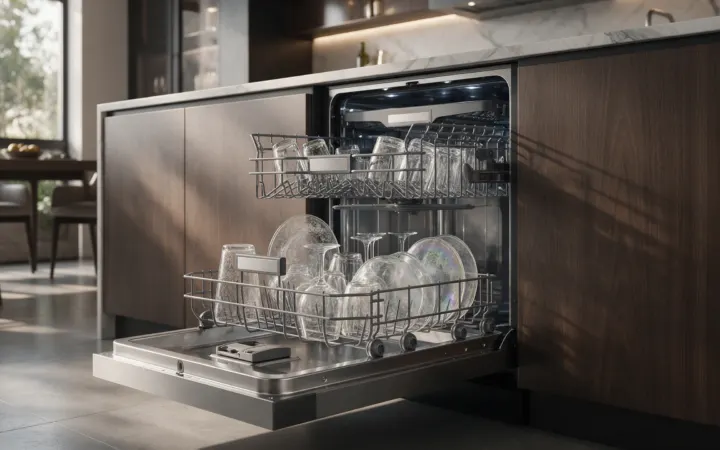
Rub a marked glass with a little white vinegar on a cloth. If the film wipes away, you are most likely dealing with mineral deposits from hard water. If it does not move, the glass may be etched, which is permanent damage to the surface and not something a repair can reverse. Spots that look like dried droplets are usually minerals; a milky haze across the entire glass is more often detergent residue or etching. Telling them apart saves you from chasing a fault that is not in the dishwasher.
The built-in water softener
Some Viking dishwashers handle hard water inside the machine. The FDWU524WS 24-inch model has a built-in water softener and accepts an optional custom panel, and the VDWU524WS lists a built-in water softener along with an installed Professional stainless steel panel. If you own one of these and the glasses are spotted, the softener setup is the first thing to check. A softener that has run out of its supply, or one that was never set for the local water hardness, will let minerals through. The use-and-care guide for your model explains how to set it, and we do not have a figure for the right setting to give you.
On models without a softener, such as the VDWU324 3 Series, hard water cannot be treated inside the machine, and spotting is the usual consequence in hard-water areas. A rinse product and a detergent suited to your water are the owner-level levers.
Filtration, wash arms and detergent delivery
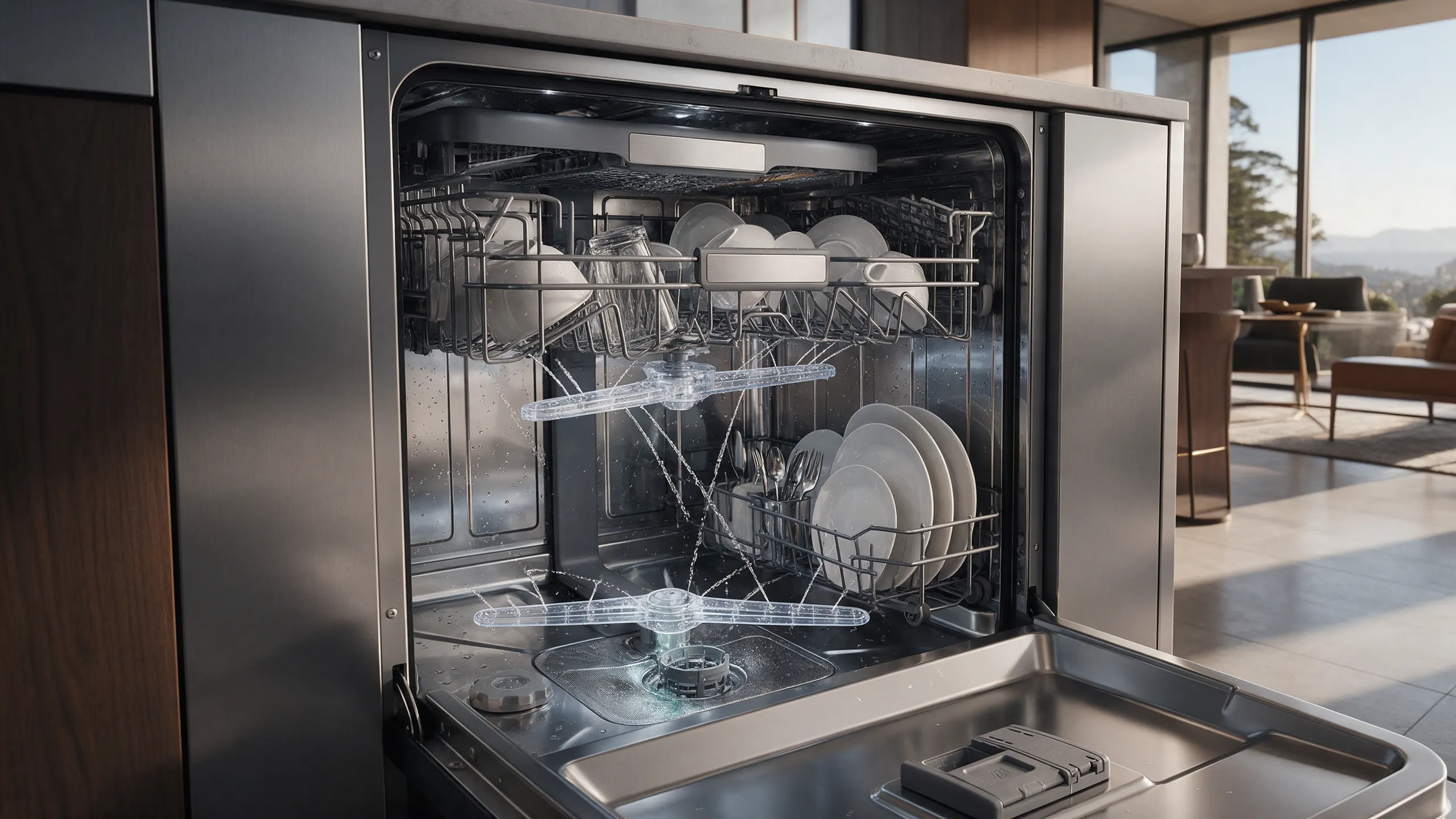
Clean glasses depend on water reaching them with enough force and passing through a clear filter. The VDWU524 uses three wash arms and triple filtration, and a filter clogged with debris will recirculate soil that settles back on glassware as a film. Remove and rinse the filter as your guide describes, and check that the spray arms spin freely and that their holes are open.
Too much detergent leaves residue, and so does too little in hard water. A scoop that is not matched to the load, or a detergent door that did not open fully, both leave a film. Keep an eye on whether the detergent cup is empty at the end of a cycle.
Codes that point to a weak wash
If glassware is spotted and a code shows, the code takes priority. A 2-2 fill error means the pressure sensor did not reach the target fill pressure, or on non-pressure models that the temperature change was insufficient. A 2-3 low level error means the water level fell below the low-level threshold. A 3-2 pump flow error means insufficient or inconsistent water flow through the wash system. Any of these would cut the cleaning and rinsing action and leave residue. The same applies to the F8 blocked filter page under a different Viking code format.
Vinegar and filter tests for spotted glasses
- Wipe a glass with vinegar to see if the film is removable.
- Clean the filter and check that the spray arms rotate by hand.
- Use a fresh detergent at the amount in the guide and see whether the result changes after two or three runs.
- Do not overload. Glassware that touches cannot rinse properly where it contacts.
- Run the hot tap before starting a cycle, if your guide permits.
Run a few cycles before judging. Residue from the old routine can persist on glasses that were not washed by hand in between.
What a vinegar test cannot say about your water
They cannot tell you the true hardness of your water, whether a softener is regenerating properly, or whether the fill is as complete as it should be. If you suspect hard water, a household test kit tells you more than the dishwasher can. If the softener is running but the problem remains, a technician needs to check the unit.
What a technician checks on a softener and wash flow
A technician reads the code, checks the fill and temperature, tests the pump flow, inspects the filter and spray arms, and examines the softener on models that have one. Our dishwasher repair page explains how to book, and the dishwasher reference lists the Viking models we cover. When you book, give us the model and serial number from the label, whether the marks wipe off with vinegar, which items are affected, the detergent and rinse product you use, any code shown, and whether your home has a separate water softener.
Frequently asked questions
Does the Viking FDWU524WS need a rinse product if it has a softener?
The source material for that model does not say. Check the guide for your unit, and if spots persist, mention it when you book.
Is cloudy glassware a sign of a failing Viking dishwasher?
Not usually. It is more often hard water, detergent residue or etching, and the vinegar test tells you which.
Can a clogged filter leave film on glasses?
Yes. A blocked filter recirculates soil, which can settle on glassware as a film.
Technical sources
- Viking 451 Series Built-In Dishwasher Use & Care Manual F20879C: https://www.vikingrange.com/MEDIA_CustomProductCatalog/m6004836_F20879C_EN_451_Series_Built-In_Dishwashers.pdf
- Viking dishwasher Use & Care Manual F20859: https://www.vikingrange.com/MEDIA_CustomProductCatalog/m4510042_F20859.pdf