Match the sound to the stage of the cycle
The same noise at different times means different things. A knocking at the very start often means the wash arm is hitting something as it begins to turn. A grinding or humming sound once the water is in suggests the circulation pump and motor. A gurgle or rattle near the end of the cycle belongs to the drain pump moving water out. If you note which stage the noise belongs to, you have already done half of what a technician would ask.
Also notice when it started. A change that appeared the day after you changed the load, moved the racks or ran a stained pot is different from one that crept in over weeks.
Spray arms, racks and what rides on them
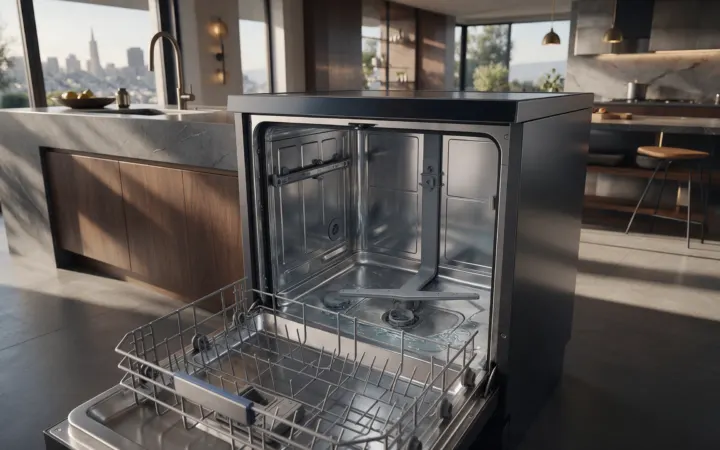
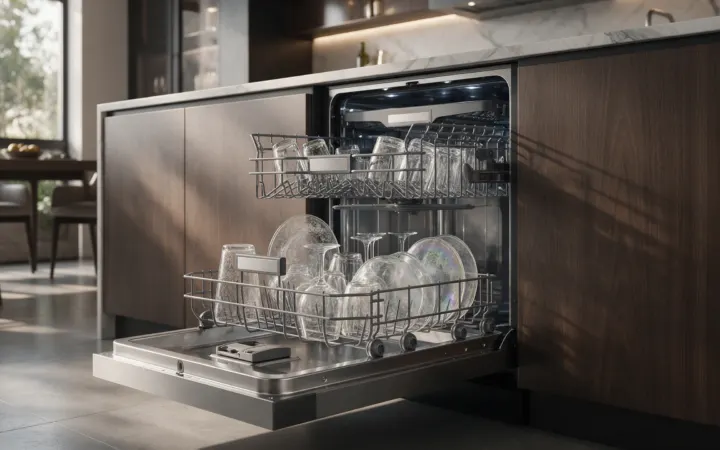
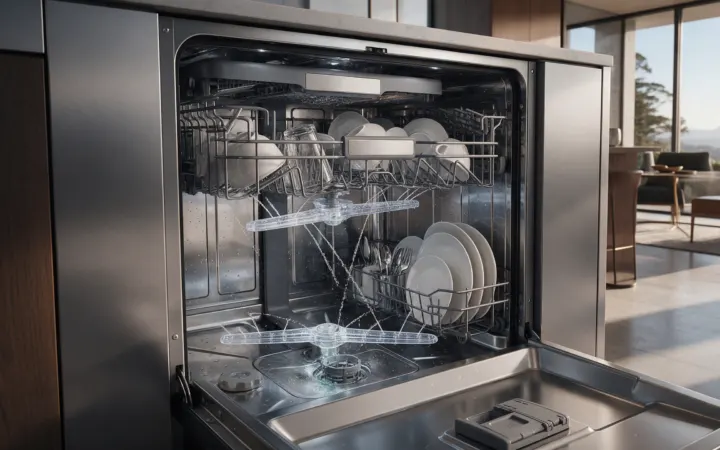
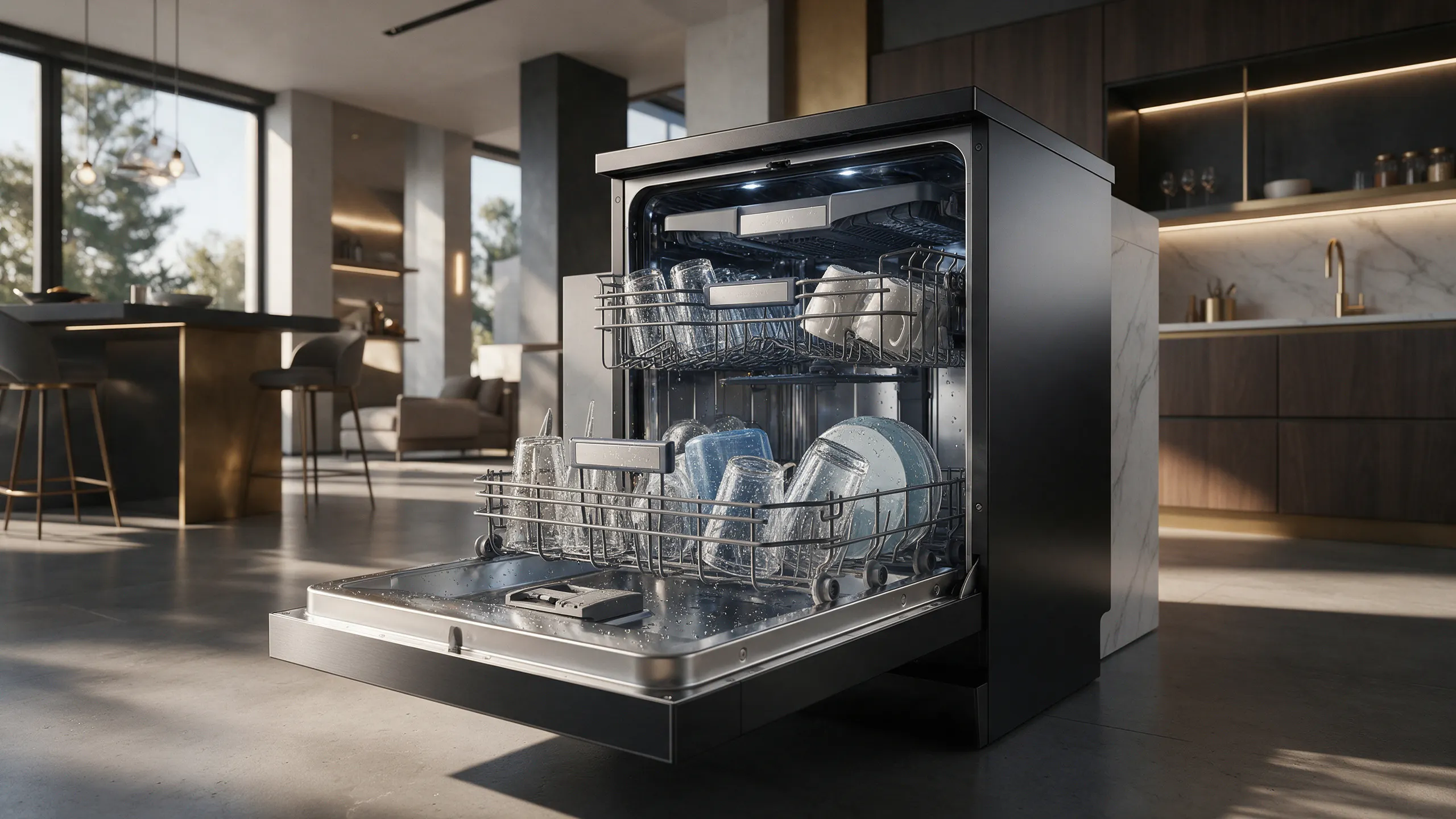
The simplest and most common source is the load. A utensil, a lid or a tall bottle can drop through the rack and strike a spray arm, and a spray arm that cannot complete its turn will clatter. The VDWU524 has three wash arms and the VDB325E has two stainless steel wash arms, so the number of arms that can be struck differs by model. Spin each arm by hand with the cycle off and check that it turns freely without scraping the rack or a dish.
On a model with CornerClean, such as the VDWU724, where the lower wash-arm axis moves to direct jets into the corners, a moving axis means the arm travels further than on a fixed design. Give tall items extra clearance on that model.
Pump, motor and the codes that describe them
A pump or motor that is wearing, or that is working against a blockage, tends to groan, whine or grind. The Viking controller reports related faults: a 1-2 code is a motor control status error on the variable-speed wash motor, where the motor operation failed or the current was out of range, and a 3-2 is a pump flow error, meaning insufficient or inconsistent water flow through the wash system. A 1-4 diverter timeout appears when the main control activates the diverter but gets no feedback that the correct position was reached. If a noise comes with any of these, give the code to the technician along with the sound.
The VDB325E’s variable-speed half-horsepower motor speeds up and slows down depending on the stage, which can make a normal change in pitch sound like a fault. A change in pitch that follows the wash stages is usually normal. A sound that is new, harsh, or constant in every stage is not.
Foreign objects in the filter and sump
Glass chips, a fruit stone, a bone or a piece of a label can get past the filter or into the sump and rattle in the pump chamber. Remove and clean the filter as the guide for your model describes. Models with multiple stages, like the FDWU524WS, which has three wash arms, triple filtration and a built-in water softener, have more filter parts to check. Take the filter out, look into the sump area with a torch, and remove anything you can reach by hand. Do not use tools in the pump.
A Viking dishwasher that is not firmly mounted in its cabinet can vibrate against the surrounding panels. If the rattle goes away when you press on the front panel, the cause may be the mounting or a loose cabinet side rather than the machine. A drain hose that touches a cabinet wall can also knock.
Quiet-cycle tests for a loud dishwasher
- Run a short cycle empty and listen. If it is quiet, the load was the problem.
- Spin both spray arms by hand and check they are free.
- Clean the filter and look for foreign objects.
- Check the display for a code after the cycle.
- Check the drain hose is not touching the cabinet or the pump housing.
Stop the cycle if the noise is a loud grinding or a burning smell, and leave the machine off.
What the owner cannot hear or measure
They cannot tell you the condition of the pump bearings or whether the motor is drawing the right current. These are measured. A technician can also tell a pump that is about to fail from one that is merely noisy, which is not visible from the front.
How a technician listens and what to tell us
A Viking technician listens during a test cycle, checks the arms, filter and sump, then tests the pump and motor. See Viking dishwasher repair for the process. Provide the model and serial number, a description of the sound, the stage, when it started, and any code shown.
Frequently asked questions
Is a noisy Viking dishwasher always failing?
No. A dish in the way of a spray arm is the most common cause, and it is fixed by reloading.
Can a code come with a noise?
Yes. A motor or flow code can appear with a grinding or humming sound, and the pair together is useful information for a technician.
Should I keep running a grinding dishwasher?
No. Stop and switch it off to avoid further damage, then note the sound and the stage.
Technical sources
- Viking 451 Series Built-In Dishwasher Use & Care Manual F20879C: https://www.vikingrange.com/MEDIA_CustomProductCatalog/m6004836_F20879C_EN_451_Series_Built-In_Dishwashers.pdf
- Viking dishwasher Use & Care Manual F20859: https://www.vikingrange.com/MEDIA_CustomProductCatalog/m4510042_F20859.pdf