Why cleaning can stop a working burner
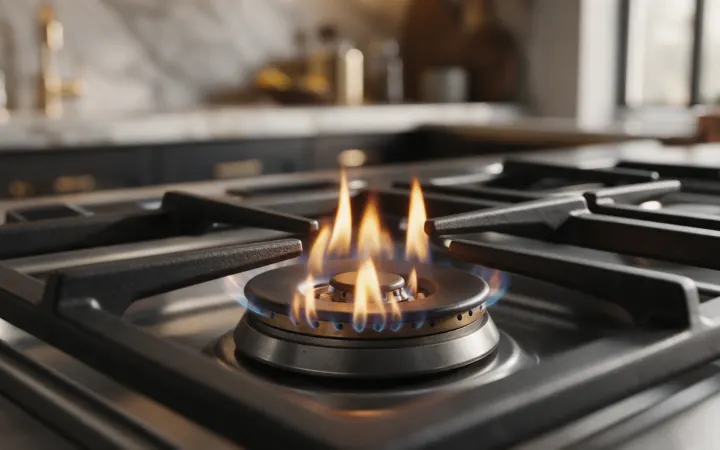
On a Viking cooktop, cleaning changes three things at once: it adds water, it moves parts, and it can leave a film of cleaner or loosened debris behind. Water that stays in the burner ports blocks the gas and the spark. A cap that went back slightly off-centre changes where the gas leaves the burner and where the spark reaches it. A film or a bit of residue on the igniter electrode insulates it. Each of these has an easy owner fix, and the problem is rarely the burner itself.
Dry first, then line up the parts
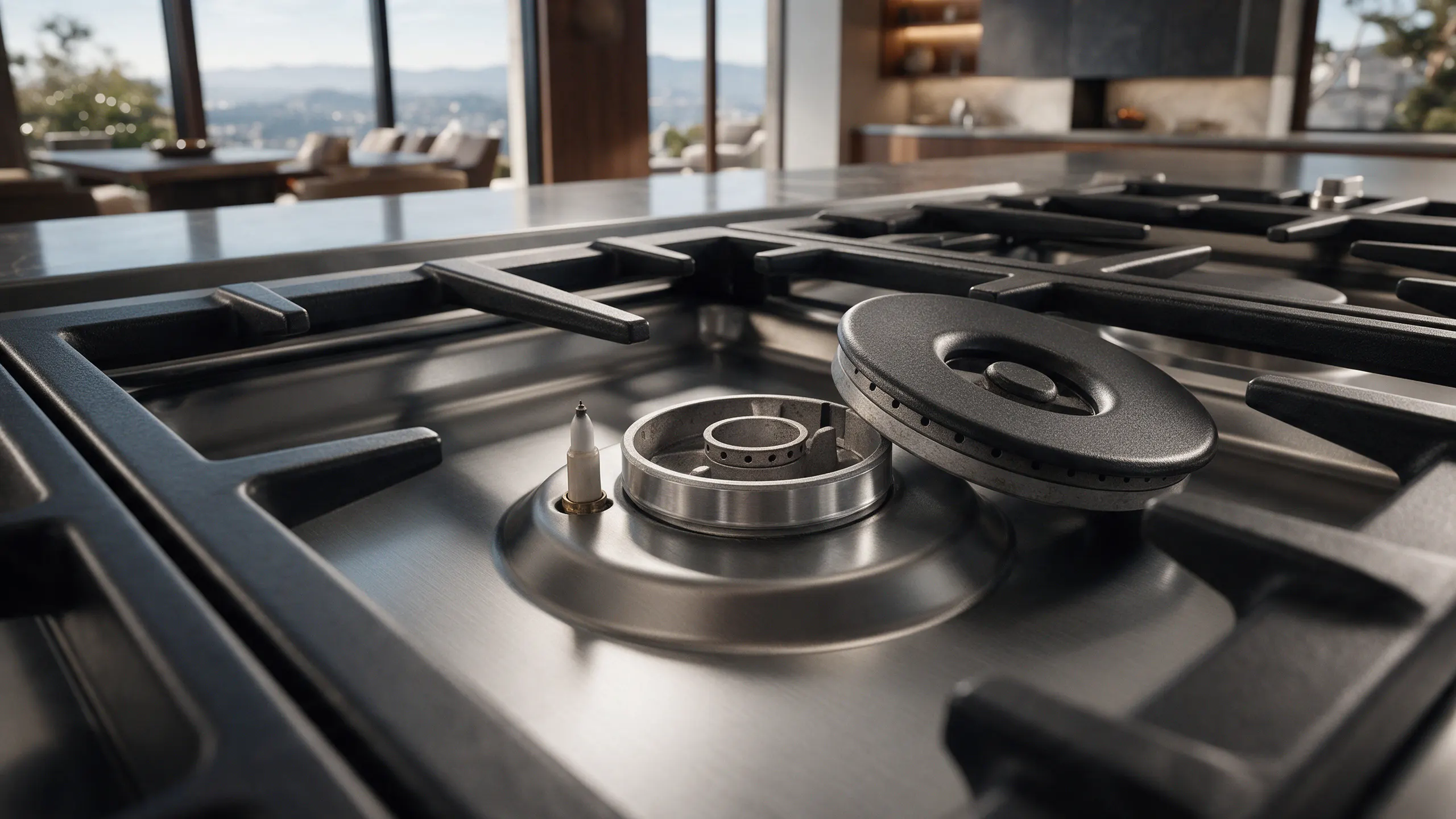
Leave the parts apart and dry them with a cloth, then give them extra time to air dry. Shake out the cap and tip it so water runs from the ports. Put the burner base on, then the cap, and check it sits flat and cannot spin or rock. On the RVGC3301 gas cooktop, which has five permanently sealed gas burners and SureSpark ignition with automatic reignition, the electronic ignition looks for a spark at the right position, so the alignment of the cap matters. On the TVDR361 Tuscany dual fuel range, all four gas burners use electronic spark ignition and automatic reignition, and the same logic applies.
Wipe the igniter electrode carefully with a barely damp cotton swab and dry it. Do not press on it, bend it or use a sharp tool. A dirty or damp electrode is the most common reason a clean burner gives no spark.
After you have reassembled one burner, test it alone before reassembling the rest. That way, if it works, you know the method is right, and if it does not, you know which assembly to examine. Keep the grates off during the first test so that you can see the flame and the cap clearly, and put the grate back once the flame is steady. Take a note of which burner you did first, because the order helps a technician if one position stays dead.
What the clicking tells you
- No clicking at any burner: the ignition is not getting power, or a control is locked. Check that the cooktop has electricity and that the range is not in a lockout state described in your guide.
- Clicking but no flame: gas may not be reaching the burner or the burner is still wet. Turn off, dry again, and retry.
- Clicking keeps going after the flame lights: the cap or electrode is dirty, or something is touching the electrode. Clean, reseat and retry.
- One burner dead, the others fine: the cause is local to that burner assembly.
If you smell gas at any time, turn everything off, leave the area and call your gas utility from outside. Do not keep trying to light the burner.
When the top is induction and not gas
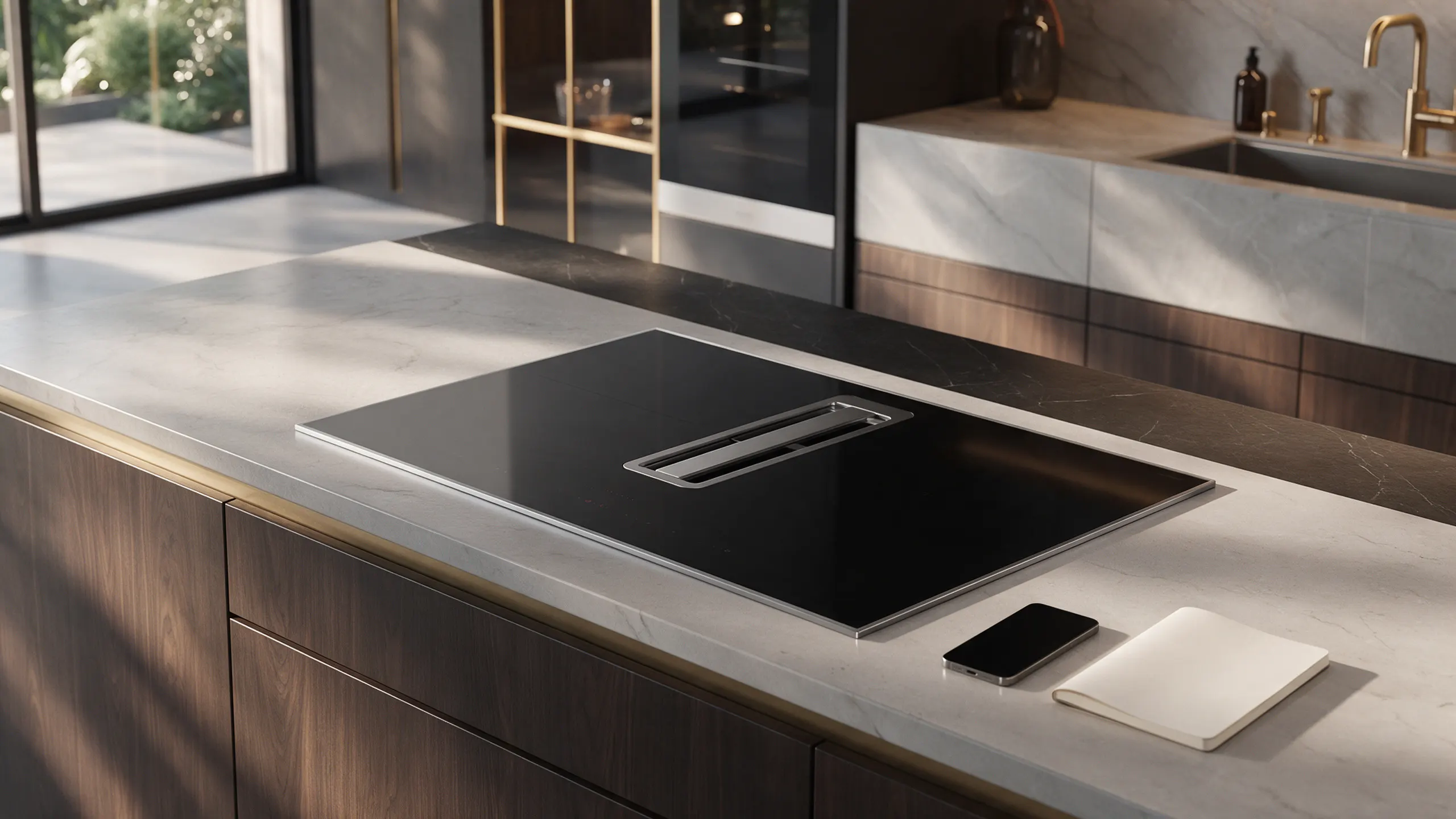
Some Viking tops do not have flames at all, and a Viking induction rangetop is the clearest example. The VIRT530 30-inch induction rangetop has four induction cooking elements, with each 9-inch element delivering up to 3,700 watts, and the VIR5302 induction range requires a dedicated 50 A circuit. These do not light; they heat. If your complaint is that an induction zone does not start, the induction indicators matter. Induction LED flash codes include 1 FLASH, internal power device over temperature, and 2 FLASHES, internal power device malfunction. Our 2 flashes page explains one of them. A flash code is not an ignition problem, and washing an induction top should not need drying of burners.
What a dry, aligned burner still cannot prove
If every part is dry and aligned and there is still no spark, the cause on your Viking is behind the cooktop: a spark module, a switch or a wire. Water that ran under the burner while cleaning may be in places you cannot reach. You cannot test the spark generator without opening the unit, and you should not open a gas appliance.
How a technician finds a missing spark
A technician checks for spark at each igniter, tests the ignition switch and module, looks for moisture or corrosion below the surface and verifies the gas supply. Details are on our Viking cooktop repair page, and the cooktop reference lists the models.
What to report about a burner that will not light
Give the model and serial number from the rating label, which burners fail, what you cleaned and with what, how long the parts dried, whether you hear clicking, and whether other burners work. If water or cleaner got under the top, say so.
Frequently asked questions
How long should a Viking burner dry before I try to light it?
The source material gives no time, so dry the parts by hand and then leave them apart until no water is visible in the ports.
Why does my burner click but not light after cleaning?
Usually the ports are still wet or blocked, or the cap is misaligned. Dry, reseat and try again.
Is it safe to keep clicking the ignition?
Briefly, yes, but if you smell gas stop at once and leave the area.
Technical sources
- Viking cooktop Use & Care Manual F20679: https://www.vikingrange.com/MEDIA_CustomProductCatalog/m3500129_F20679.pdf
- Viking owner support FAQs: https://vikingrange.com/owners/support-faqs
- Viking range documentation archive: https://vikingrange.com/support-and-documentation/product-documentation/filter/category/cook_viking