Scope of the repair
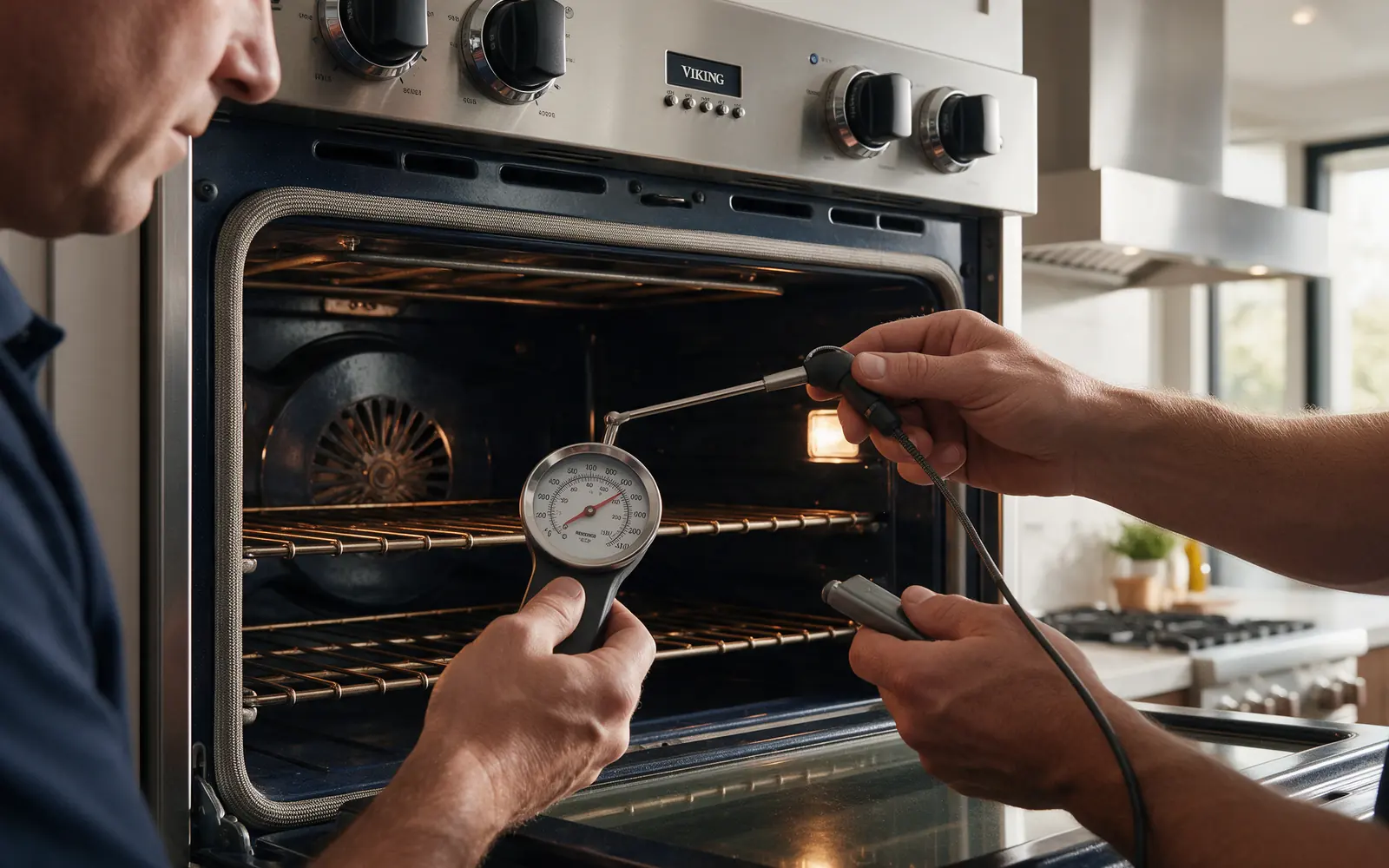
The relevant diagnostic scope can include heating circuits, temperature sensing, bake/broil outputs, convection and cooling fans, probe input, latch feedback, controls, and power. Bake and broil outputs are the heating paths, while temperature sensing tells the control how hot the cavity is, so a heating complaint can sit on either side of that loop.
A visible symptom narrows the path, but it does not identify a failed part by itself. The exact Viking model determines which controls, sensors, fuel/power systems, and service documentation apply.
Common operating problems
- Oven Does Not Heat. Record when it happens and what still works normally. A display that works without bake heat can involve the heating path, power supply, control output, safety devices, sensing, or wiring. It does not automatically prove the element or control has failed. Whether the broil side works while bake does not tells service which path to examine first.
- Slow Preheat. The model and operating context determine the next diagnostic step. Preheat time should be compared with the appliance’s normal behavior, selected mode, load, door usage, power/fuel configuration, and whether one heating path is missing.
- Broiler Does Not Heat. A broil-only issue narrows the path differently from an oven that has lost all heat.
- Convection Fan Does Not Run Normally. This symptom can involve more than one system. Some fan behavior depends on mode and control logic. A fan that never runs, runs noisily, or triggers a feedback fault should be diagnosed by model. The convection fan moves heated air around the cavity, so uneven results can accompany a fan that is not running as intended.
- Door Remains Locked. Record when it happens and what still works normally. A self-clean latch complaint can involve door position, latch movement, door-switch/interlock feedback, control logic, or temperature state. Do not force the door.
- Probe, Keyboard, or Display Message. The model and operating context determine the next diagnostic step. Viking documentation includes textual messages such as
PROBE ERROR,KEYBOARD ERROR,RTD ERROR,LATCH ERROR, andMODEL ERRORon applicable controls. - Textual Messages. The corrected library includes:
- Older Oven F1/F2/F3. This symptom can involve more than one system. On the documented older VGSO166 reference:
Model-aware diagnosis
Related Viking models include:
Use the complete rating-label model whenever possible.
Error-code and alarm context
Related codes and alarms include:
- refrigerator
E1meanings remain platform-specific; - older oven
F1is not EOC4F01; - cooktop
FCandFcremain case-sensitive separate codes; - maintenance displays should not automatically be labeled hardware failures.
Safe owner-level checks
Owner checks should remain external, observable, and reversible. Comparing one mode with another, such as bake against broil, gives the technician information that a single description cannot.
Depending on the appliance, that can include:
- recording the exact symptom before resetting;
- checking user-removable or owner-accessible parts described by the manual;
- comparing one burner, zone, compartment, cycle, or mode with another;
- noting recent cleaning, power, loading, plumbing, or weather changes;
- saving any code, alarm, or flash pattern before a normal documented reset.
Do not test live heating circuits, bypass a latch or thermal device, or force a locked oven door.
When to stop using the appliance
Stop normal use for gas odor, smoke, visible arcing, persistent burning/electrical odor, repeated breaker trips, uncontrolled heat, water reaching electrical components, dangerous flame behavior, damaged glass or interlocks, or another unsafe condition relevant to the appliance.
Do not keep restarting the product simply to see whether the symptom returns.
What professional diagnosis may involve
A technician should confirm the exact model and configuration first, then evaluate the system indicated by the symptom and any verified code.
The diagnostic path may compare:
- utilities and installation;
- sensors and switches;
- controls and communication;
- heating, cooling, ignition, water, airflow, or mechanical operation;
- wiring/connectors;
- protected internal components that are not owner-serviceable.
The repair recommendation should follow test results.
Current and legacy context
Viking’s model library includes current official products and retained legacy/site-only records. Current and legacy appliances can look similar while using different controls or technical documentation.
Request service in San Francisco
Send:
- full Viking model number;
- exact symptom;
- code/alarm if present;
- affected function;
- what still works normally;
- safe checks completed;
- service ZIP code;
- access details.